Introduction: What is a Lithium Iron Phosphate (LiFePO4) Battery?
Lithium Iron Phosphate (LiFePO4) batteries are a specific type of lithium-ion battery that uses lithium iron phosphate as the cathode material. They are widely recognized for their outstanding thermal stability, extended lifespan, and enhanced safety. The battery structure features an aluminum foil connected to the cathode and a copper foil connected to the graphite anode. A polymer separator is placed between the electrodes; it permits the flow of lithium ions while blocking electrons, which helps in managing charge and discharge cycles with precision.
The entire cell is housed in a sealed metal casing. During charging, lithium ions travel from the cathode through the separator to the anode. During discharge, the ions move back to the cathode. This repeated movement of ions is the fundamental operating principle of all lithium-ion batteries.
Evolution of LiFePO4 Batteries: A Technological Journey
1. Early Development: The Foundation (1990s)
Lithium-ion battery technology gained significant traction in the 1990s. Sony commercialized the first lithium cobalt oxide (LCO) battery in 1991. However, LCO batteries presented notable drawbacks, including high production costs, thermal instability, and dependence on scarce cobalt. These limitations constrained their large-scale adoption, especially in applications that demanded high safety and cost efficiency.
2. Discovery and Validation of LiFePO4 (1996)
In 1996, Professor John B. Goodenough—often called the “Father of the Lithium-ion Battery”—and his research team published a pioneering paper introducing Lithium Iron Phosphate as a viable cathode material. LiFePO4 offered clear advantages over conventional lithium cobalt oxide:
-
Exceptional thermal and chemical stability.
-
Enhanced safety due to its olivine crystal structure, reducing risks of fire or explosion.
-
Theoretical cycle life in the thousands.
However, the material also had initial shortcomings:
-
Low electrical conductivity.
-
Lower energy density (nominal voltage around 3.2V).
-
Low tap density, leading to bulkier cells.
A well-known remark from Goodenough in 2017, when asked about not receiving a Nobel Prize earlier, captures his attitude: “It’s okay, I’m Goodenough.” He highlighted the value of perseverance: “Be the turtle that climbs slowly but steadily. Every step counts.”
3. Key Innovation: Carbon Coating
To overcome the poor conductivity, Professor Michel Armand proposed an effective solution: coating nano-sized LiFePO4 particles with a thin conductive carbon layer. This method can be likened to building an expressway around isolated “houses,” dramatically improving electron flow. Carbon coating was a critical breakthrough that made LiFePO4 batteries commercially feasible.
4. Slow Growth During the Energy Race (2000s)
Throughout the 2000s, consumer electronics—smartphones, laptops, and similar devices—drove demand for high-energy-density batteries, a area where LiFePO4 lagged. Lithium cobalt oxide and later NCM (Nickel Cobalt Manganese) chemistry took center stage. Even Tesla initially chose NCM cells to prioritize driving range.
Nevertheless, LiFePO4 found steady use in niches where safety and longevity were paramount:
5. Market Boom and Widespread Adoption (Post-2010)
The real shift occurred after 2010. China identified electric vehicles (EVs) and renewable energy as national strategic priorities, focusing on battery safety, cost reduction, and supply chain independence. LiFePO4, with its cobalt-free chemistry, durability, and affordability, emerged as an ideal match.
Companies like BYD and CATL spearheaded global innovation in LiFePO4 technology. Their advances in cell design and manufacturing ignited international demand, extending beyond China to markets in the U.S. and Europe. The global energy transition further fueled adoption, with LiFePO4 becoming the battery of choice for portable power stations and mainstream electric vehicles.
Capacity Evolution: LiFePO4 Battery Development Timeline
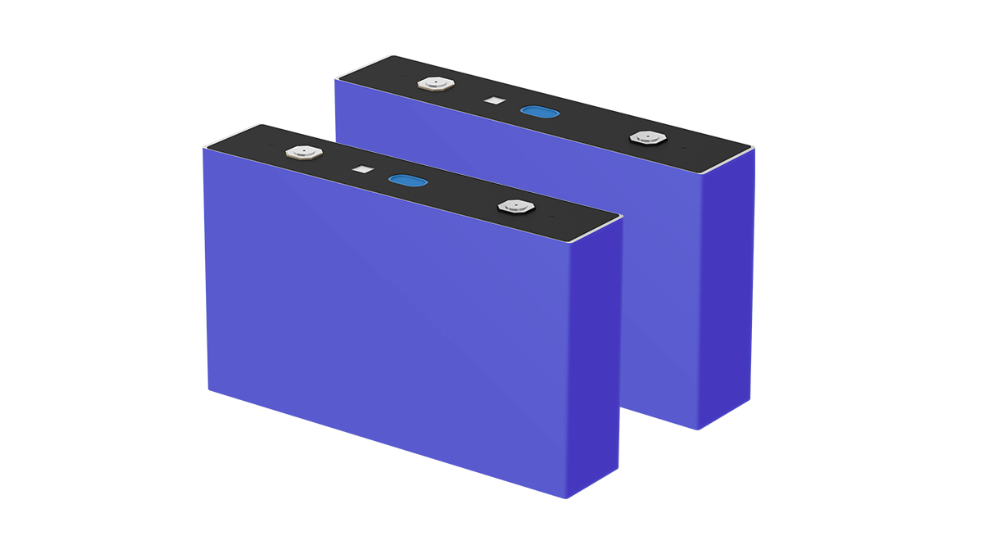
*628ah LiFePO4 Battery cell
Over the years, LiFePO4 batteries have achieved remarkable progress in capacity and application diversity. Below is a timeline highlighting key milestones in capacity (in amp-hours), technological advances, and primary use cases:
(Note: A visual timeline chart would typically be inserted here, illustrating capacity growth from early ~10Ah cells to modern 300Ah+ products, alongside evolving applications from small UPS to EVs and large-scale energy storage.)
| Period |
Typical Capacity (Ah) |
Technology Traits |
Applications |
| 2000 – 2008 |
10Ah – 40Ah |
Small cylindrical cells (e.g., 18650, 26650) |
Power tools, e-bikes, low-speed EVs |
| 2009 – 2016 |
50Ah – 150Ah |
Adoption of prismatic cells |
Electric buses, delivery vans |
| 2017 – 2019 |
200Ah – 250Ah |
Stacked cell designs improved density |
Passenger electric vehicles |
| 2020 – 2023 |
280Ah |
Density-focused optimization |
Grid storage, renewable system integration |
| 2024 |
314Ah |
Enhanced power efficiency |
Commercial energy storage, grid applications |
| 2025 (forecast) |
587Ah – 684Ah |
Ultra-high capacity cells |
Industrial-scale solar and wind storage systems |
How Temperature Affects LiFePO4 Battery Performance
Temperature is a critical factor influencing the efficiency and service life of LiFePO4 batteries. Here’s how performance varies across temperature ranges:
-
Optimal Range: 15°C – 35°C
Delivers peak performance and maximum cycle life. Electrolyte behavior is stable, ensuring high efficiency.
-
Functional Range: -20°C – 45°C
The battery remains operational, but charge/discharge efficiency declines as temperatures approach the limits.
-
Extreme Tolerance: -40°C – 60°C
In low temperatures:
Electrolyte viscosity increases, internal resistance rises, and capacity drops significantly.
In high temperatures:
Electrode degradation accelerates, causing irreversible chemical damage. Operating 15°C above the recommended range can cut cycle life by half.
Maintaining suitable environmental conditions is essential for maximizing both performance and longevity, especially in demanding settings like electric vehicles or off-grid energy storage.
Key Benefits of LiFePO4 Batteries
-
Superior Safety: Highly resistant to thermal runaway, fire, and explosion.
-
Long Service Life: Typically 2,000–5,000 cycles with proper battery management.
-
Eco-Friendly: Contains no heavy metals such as cobalt or nickel.
-
High Discharge Capability: Supports high-power applications.
-
Stable Voltage Output: Maintains consistent power delivery throughout discharge.
Final Thoughts: The Promising Future of LiFePO4 Technology
From a laboratory breakthrough to an industrial mainstay, Lithium Iron Phosphate batteries have demonstrated that safety, longevity, and cost-effectiveness can go hand in hand. As the world accelerates its transition to clean energy, electric mobility, and grid storage, LiFePO4 is not just a competitive option—it is leading the way.
Driven by continuous innovation, particularly in China, and growing global demand for sustainable energy storage, LiFePO4 batteries are poised to define the next decade of energy storage technology.
Welcome to contact us:
Inquiry more product details from the : Lithium Ion Battery Manufacturers
WhatsApp/Wechat/Mobile: +86 14704451321
Email: support@szxhbattery.com
Website: www.szxhbattery.com
Ready to power your energy systems with the best in the industry?
Contact us today to get the latest pricing and discuss your needs with our team!